






Every parent remembers the moment. The baby lets go of the coffee table, wobbles for a second, and takes two steps before sitting back down. It's over in three seconds, and it's one of the best things you'll ever see.
But the buildup to that moment — the rolling, the sitting, the pulling up, the cruising — is where the real work happens. And what's on your baby's feet during all of it matters more than most people realize.
When do babies start walking?
Most babies take their first independent steps somewhere between 9 and 15 months. Some walk at 10 months. Some wait until closer to 15. Both are completely normal, and neither predicts anything about how they'll develop from there.
What matters more than timing is the progression:
- Rolling builds core strength and spatial awareness
- Sitting develops trunk stability
- Pulling to stand strengthens legs and confidence with weight-bearing
- Cruising — that sideways shuffle along the couch or coffee table — refines balance before the hands let go
- First independent steps follow when the body is ready
Each stage builds on the last. There's nothing to rush. The best thing you can do is give them a safe space to move and let their body lead.
Quick answer: Most babies walk between 9 and 15 months. The typical progression goes rolling → sitting → pulling to stand → cruising → independent walking. If your baby hasn't walked by 18 months, check in with your pediatrician.
What their feet are doing during all of this
When a baby is cruising or pulling to stand, their feet are doing a lot of quiet work. Every time a foot presses against the floor, it sends information to the brain — about the texture underfoot, the angle of the surface, how much weight to shift. The brain uses all of that to figure out balance.
This is why soft, flexible footwear matters during this stage. A thick, rigid sole interrupts that feedback between foot and floor. A thin, flexible one allows it — the way bare feet would, but with a little protection against cold or rough surfaces.
Toe room matters too. When toes can spread out naturally, they create a wider, more stable base. It's a small detail that makes a real difference when a baby is finding their footing for the first time. This is sometimes called barefoot simulation — footwear designed to let the foot move and feel as freely as possible while still offering protection.
Signs they're getting close
You'll start to notice a few things before those first steps arrive:
- Standing unsupported for a few seconds — sometimes by accident
- Squatting to pick something up and pushing back to standing without grabbing for support
- Moving faster and more confidently along the furniture
- Looking less at their feet and more at where they're going
When you see those things consistently, the first steps are usually close. Keep the floor clear, stay nearby, and let them figure it out.
What to put on their feet
During the cruising and early walking stage, the goal is simple: flexible, lightweight, and secure.
You want something that stays on through tummy time, floor play, and early steps — doesn't add stiffness or weight to a foot that's still finding its way — and gives enough protection against household surfaces without getting between the foot and the floor.
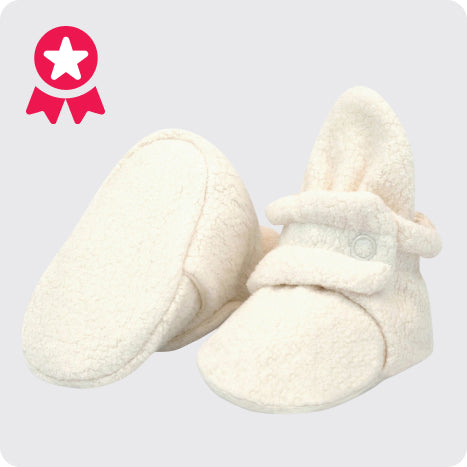
Zutano's organic cotton gripper bootie is built for exactly this stage. Soft fabric, flexible construction, and a two-snap closure that adjusts for fit and stays secure through all of it — without restricting movement or adding bulk. They move with the baby, not against them.
The structured shoes can wait. Right now, the foot needs to feel the floor.
Frequently asked: What shoes should a baby wear when learning to walk? Pediatric occupational therapists generally recommend soft-sole, flexible footwear during the cruising and early walking stage. Rigid soles and structured uppers are better suited for later, once independent walking is established. Bare feet on safe indoor surfaces are ideal — soft-sole booties are the next best thing.
What to keep in mind
Every baby has their own timeline. Anywhere from 9 to 15 months is normal. Try not to measure against other babies. It rarely helps.
Soft and flexible is the right call right now. Rigid soles and structured uppers are for later. The foot needs to feel the floor and move freely. Thin, flexible soles and a wide toe box support that.
Floor time is the best preparation. The more time a baby spends on the floor — rolling, sitting, pulling up, cruising — the stronger and more coordinated they get. Let them move at their own pace.
Bare feet are great too. On safe indoor surfaces, bare feet are ideal. A good soft-sole bootie is the next best thing — for cold floors, rough surfaces, or anywhere outside the house.
This content was developed by the Zutano team, drawing on guidance from pediatric occupational therapists and infant development research. Zutano has been making baby essentials — including their signature stay-on booties — since 1989. Always consult your pediatrician with specific developmental questions.


Leave a comment