






A baby's skin is thinner and more sensitive than an adult's, which means even brief time in direct sunlight can cause real discomfort. The good news is that protecting them doesn't require a complicated routine. A few well-chosen pieces go a long way.
Start with what they're wearing
Before reaching for sunscreen, start with what's on your baby's body. For newborns especially, physical coverage — fabric, shade, and shelter — is the most straightforward form of protection. It doesn't rub off, doesn't need reapplication, and doesn't introduce anything to sensitive skin.
For older babies, sunscreen has its place. But even then, it works best as a backup to good coverage rather than the first line of defense. Sunscreen on a baby's feet is notoriously hard to maintain — it rubs off against stroller footrests, gets grabbed and mouthed, and disappears within minutes of being applied. A pair of breathable cotton booties does the job more reliably and lasts the whole outing.
The gap the stroller canopy doesn't cover
Stroller canopies are useful, but they have limits. They shade the face reasonably well when the sun is directly overhead — but on a morning walk, an afternoon at the park, or any time the sun is low and angled, the coverage shifts. Feet, lower legs, and the sides of the face are frequently exposed even with the canopy fully extended.
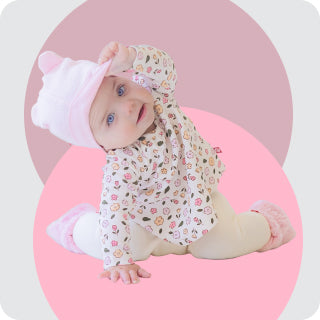
This is where the details matter. A hat that shades the face and ears. Booties that cover the top of the foot — an area that sits fully exposed when a baby is reclined in a stroller or carrier. Together, they close the gaps that canopies and shade structures leave open.
What to look for in a sun hat
A good baby hat for summer does two things: it shades, and it stays on. The brim needs to be wide enough to cover the face, ears, and the back of the neck — the areas most exposed during a stroller walk or time on a blanket at the park.
Zutano baby hats come in two styles, both made in GOTS-certified organic cotton with UPF 30+ protection. If you're unsure which size to start with, our sun hats are sized by age — newborn through 24 months — and run true. A general guide: most newborns fit a 0–6-month hat, and most babies transition to the next size around 6–9 months, though head circumference varies. Here is a size guide for hats.
The sun hat with a chin tie sits close to the head with a full brim that wraps around to protect the ears and neck. The chin tie keeps it on through wind, movement, and the inevitable moment when a baby decides they'd rather hold the hat than wear it.
The bucket hat has a structured brim all the way around and a slightly more relaxed fit — well-suited for babies who resist the chin tie, or for days when you want something that goes on easily and stays put without adjustment.
Both are lightweight, breathable, and made to be worn in warm weather without adding heat. Organic cotton allows airflow in a way that synthetic fabrics don't, which matters when a baby is spending time in direct sun and needs to stay comfortable while they're protected.
Booties in summer — yes, really
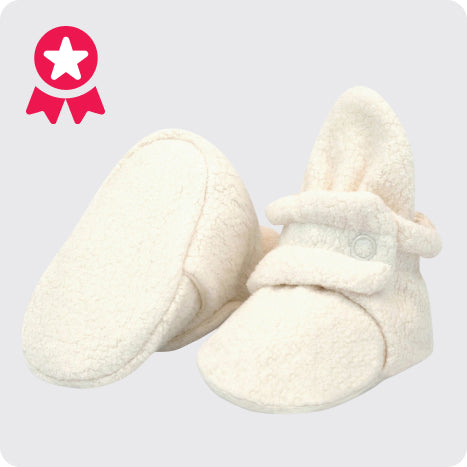
It might seem counterintuitive to put booties on a baby in warm weather. But GOTS-certified organic cotton booties aren't about warmth — they're about coverage and comfort. In summer, they serve a different purpose: protecting the top of the foot from sun exposure during stroller walks, carrier time, and outdoor play.
Zutano's organic cotton booties are lightweight and breathable — made from GOTS-certified 100% organic cotton, with a two-snap closure that keeps them on through the whole outing. They don't add heat, they don't restrict movement, and they cover the one area that stroller canopies consistently miss.
For families spending time outdoors through the summer — at the park, on the beach, at farmers markets, on vacation — they're one of the more practical additions to a warm-weather kit.
A simple summer checklist
For newborns (under 6 months) Physical coverage is the priority. Keep them in the shade as much as possible, use a sun hat with a chin tie, and cover exposed skin with lightweight organic cotton. Consult your pediatrician before applying sunscreen to very young babies.
For older babies (6 months and up) A sun hat, breathable organic cotton clothing, and sunscreen on exposed areas — applied after coverage, not instead of it. Reapply sunscreen regularly and keep an eye on how much direct sun they're getting during peak hours (10am–2pm).
For stroller time at any age Use the canopy, but don't rely on it entirely. A hat and a pair of cotton booties close the gaps the canopy leaves open — face, ears, neck, and the tops of the feet.
For carrier time Babies in carriers are often more exposed than babies in strollers — their head, face, and feet are all in open air. A hat is essential. Booties help. Shade when you can find it.
This content was developed by the Zutano team. Sun safety guidance is general in nature and is not a substitute for advice from your pediatrician. Always consult your doctor with specific questions about sun exposure for your baby, particularly for newborns under 6 months.


Leave a comment