






The first year of a baby’s life is a period of rapid physiological change, particularly in the feet, which are primarily composed of soft, flexible cartilage. As your child moves from the "cuddle" phase to taking their first wobbly steps, their footwear must evolve to match their developmental milestones. Choosing the wrong shoe too early can restrict natural growth, while the right footwear supports neurological feedback and muscle strength. At Zutano, we design our booties and shoes to act as a protective "second skin" that respects the natural anatomy of a growing foot at every stage.
The Newborn Phase: Prioritizing Thermal Regulation
In the first few months, a baby’s feet are not weight-bearing, but they are highly susceptible to heat loss. During this stage, footwear is less about structure and entirely about comfort and temperature control.
- Material Integrity: Organic cotton booties offer the breathability needed to prevent overheating while keeping toes cozy during naps.
- Stay-On Security: Because newborns are active kickers, the signature Zutano two-snap system keeps booties secure without the need for tight, circulation-restricting elastic.
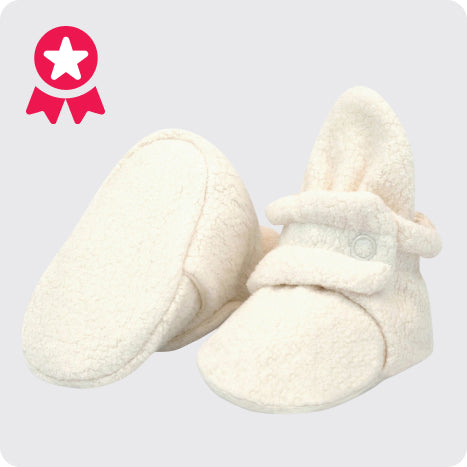
- Winter Protection: For colder climates, our Sherpa-lined booties (70% cotton / 30% polyester) provide high-loft insulation that keeps feet warm during stroller walks without adding unnecessary bulk.
The Discovery and Sitter Stage: Supporting Active Movement
Between 2 and 7 months, babies begin to explore their environment by kicking and pivoting. This is a critical window for muscle development.
- Footwear Flexibility: Footwear at this stage must remain completely soft-soled to allow for the natural gripping and stretching motions essential for building foot strength.
- Tummy Time Support: Lightweight fleece booties provide a soft barrier against the floor during tummy time, allowing the baby to push and pivot without friction while maintaining a stable body temperature.
The Crawler and Cruiser Stage: Traction and Protection
As infants begin to crawl and pull themselves up to stand (typically between six and ten months), their relationship with the ground changes.
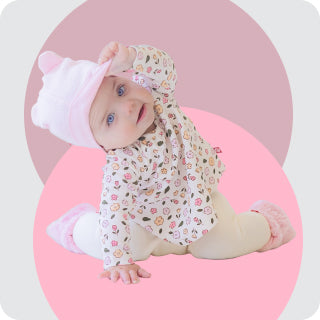
- Stay-On Durability: Crawlers often rub their feet against the floor, which causes traditional socks to slip off instantly. The mechanical snap closure of Zutano booties prevents this "sock loss," ensuring continuous protection.
- Sensory Feedback: Even as babies begin to stand, soft-sole booties are still recommended over structured shoes. Feeling the floor through a thin, flexible layer helps the brain develop the balance required for walking.
The Transition to Early Walking: Mimicking the Barefoot Experience
When a baby takes their first independent steps, usually between nine and fifteen months, the transition to "shoes" begins—but with a caveat.
- The Barefoot Principle: The best footwear for early walkers mimics barefoot movement as closely as possible. Stiff, heavy soles should be avoided as they can interfere with the baby's ability to "grip" the floor with their toes.
- Flexible Protection: Zutano’s soft-sole first walkers provide a thin layer of protection for outdoor use while maintaining the flexibility needed for a natural gait.
Key Takeaways for Parents
- Stage 1 (0-3 Months): Focus on GOTS-certified organic cotton for breathability and warmth.
- Stage 2 (4-9 Months): Prioritize "Stay-On" snap booties to handle increased kicking and crawling.
- Stage 3 (10-15 Months): Transition to flexible, non-rigid soles that allow for natural toe-spreading and balance.


Leave a comment